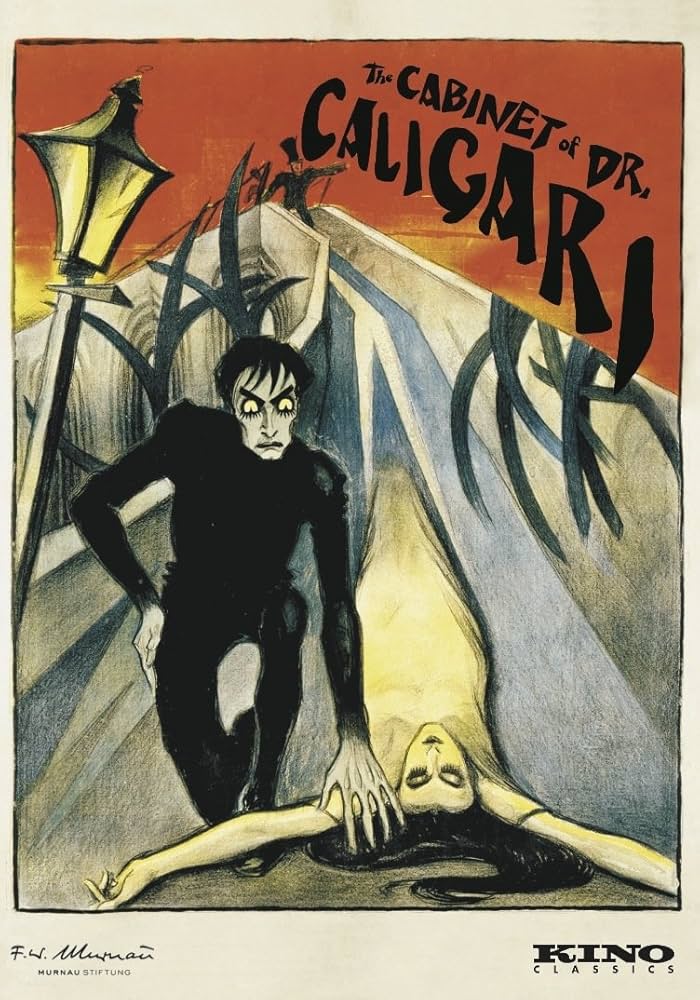
Upon hearing the name The Cabinet of Dr. Caligari, I was immediately intrigued. It sounded mysterious and strange, which is exactly the kind of film I would expect to enjoy. Initially, I was really hesitant about watching a silent film. I expected that would make it more difficult to pay attention.
I was also intrigued by the history of this time period for film. I had heard of German expressionism before, but I had no idea what it was. Although, the time period between WWI and WWII in Germany is something I find incredibly interesting and important today. Even though it’s not necessarily a historical film, art has been and always will be a reflection of the society around it. It’s important to view older media through this lens, as it will loop around and become relevant again.
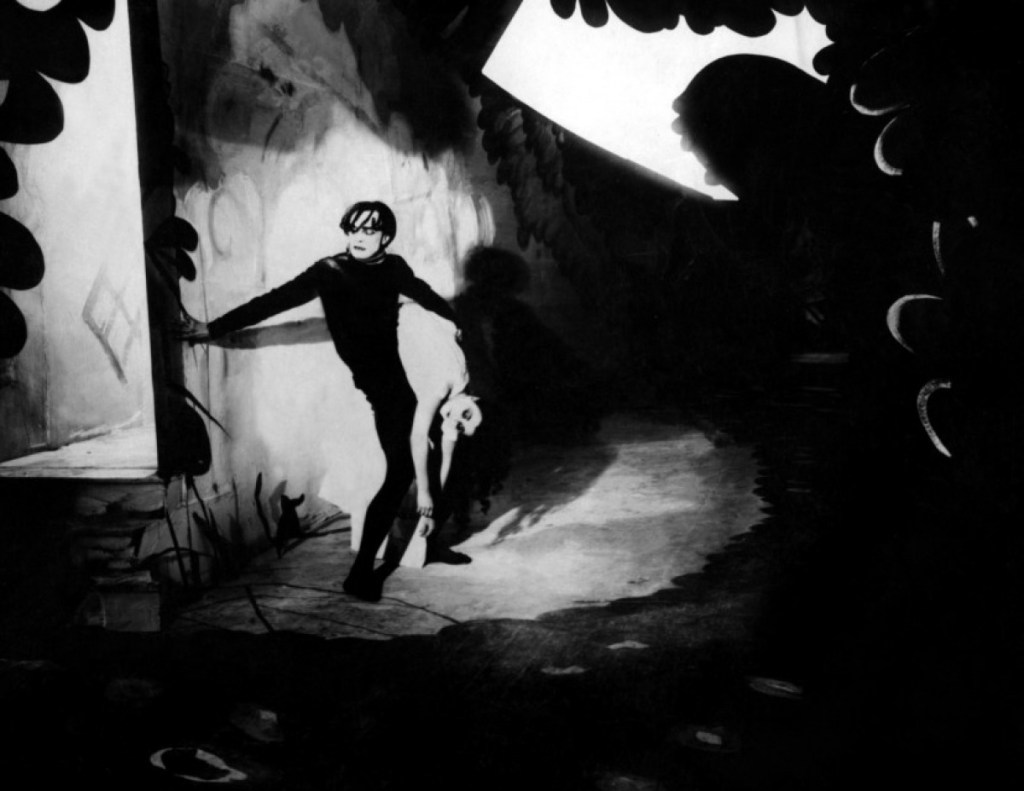
My first thought was that the intro and the font specifically reminded me of the 1990s/2000s show Courage the Cowardly Dog. I tried to see if there was any confirmed connection between the two, but all I got was that Courage was inspired by horror as a genre, but not specifically this movie. It might not have any distinct connections, but the emotion it conveyed was still similar. Another one of my initial thoughts was that the set design resembled a Dr. Seuss book, or even the Scary Stories to tell in the Dark series. And of course, it had similarities to any Tim Burton movie. Ultimately, this makes the movie have a childlike sense of comfort for me, considering those were a large chunk of my favorite things.

Courage the Cowardly Dog
Note the strange proportions and angles
Illustration from Scary Stories to Tell in the Dark
Illustrated by Stephen Gammell.
Delving more into how the set design affected the viewing experience, it added a sense of whimsy, and yet discomfort. It was intriguing to see unique angles, shapes, and shadows.
The angle made it feel like we were peering into something we weren’t supposed to be, almost as if the audience was hidden behind something peeking in. To me, it estranged the audience from the scene. It felt as if I was sort of crouched and hidden, peering in on something I wasn’t supposed to see.
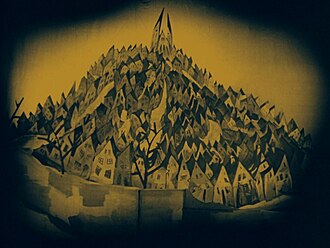
The use of color and shadow was also incredible. I couldn’t quite distinguish the relationships between the use of yellow and blue, or if they even meant anything. I did, however, notice that pink was used a couple times. The pink scenes also include softer shapes and shadows. Instead of all background shapes being angular and sharp, they were more rounded.
I found myself pleasantly surprised by how much I enjoyed the silent film. I found that it was great to separate the senses in that way. Without audible dialogue, all I really had was the scene itself, giving me time to really interpret what I was seeing. I thought it would make it harder for me to focus, but I actually found it more enveloping. I also tend to find a lot of movies, especially with too many sounds or loud dialogue, overwhelming. I never considered, though, that silent films might suit my preferences more.
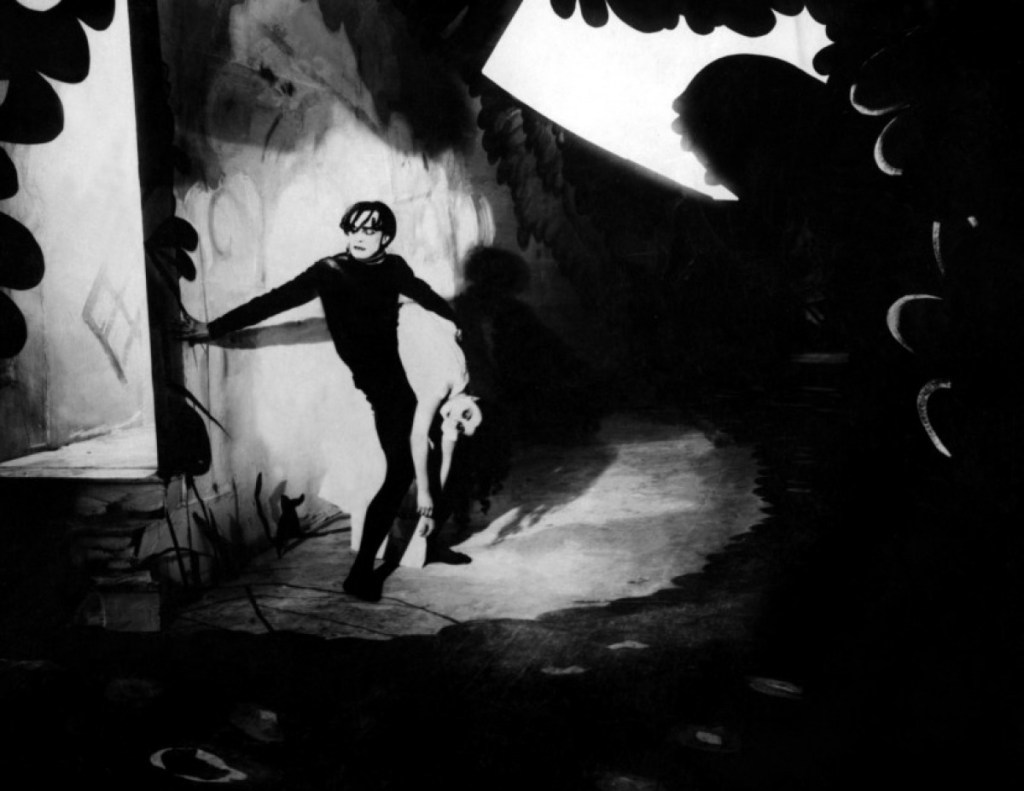
I found the plot difficult to follow at several points, but I also really enjoy movies that are harder to interpret. It’s very enveloping to have something focus on the feel and expression rather than the direct actions themselves. Not that the plot was irrelevant, it just seemed to me that the focus was on artistic expression and experimentation of different visuals.
I tend to hyperfixate on pieces of media I deeply enjoy, especially since I have such a specific taste. The Cabinet of Dr Caligari has definitely been added to my list of comfort movies. I found myself trying to get my boyfriend to watch it, although we have drastically different tastes. I was trying to find an edit or video that would capture the essence of the film, in hopes to inspire him to watch it. I came across a video discussing the topic of autonomy in this film. I didn’t watch the video, and tried to see how I could interpret this myself. Clearly, a main focus of this film is the topic of control. Dr. Caligari has control over Cesare, forcing the man to do his will. I’m not a big history buff, but I have always found pre-WWII Germany very intriguing. I imagine the German people in this time period could relate to Cesare. During WWI, shortly before this film was created, German soldiers were doing the bidding of their government, regardless of personal belief. After the war, Germans were impoverished, excluded, and shamed. All of this is out of control of the common man. Average people were trudged through years of suffering due to decisions made by people above them. They had a lack of control or autonomy over their own life and choices. This might not be a direct or intended correlation, but art is always an expression of real life, and is always subject to interpretation. In a lot of ways, the themes in this film give light to the struggles that lead to the rise of Hitler shortly after this.
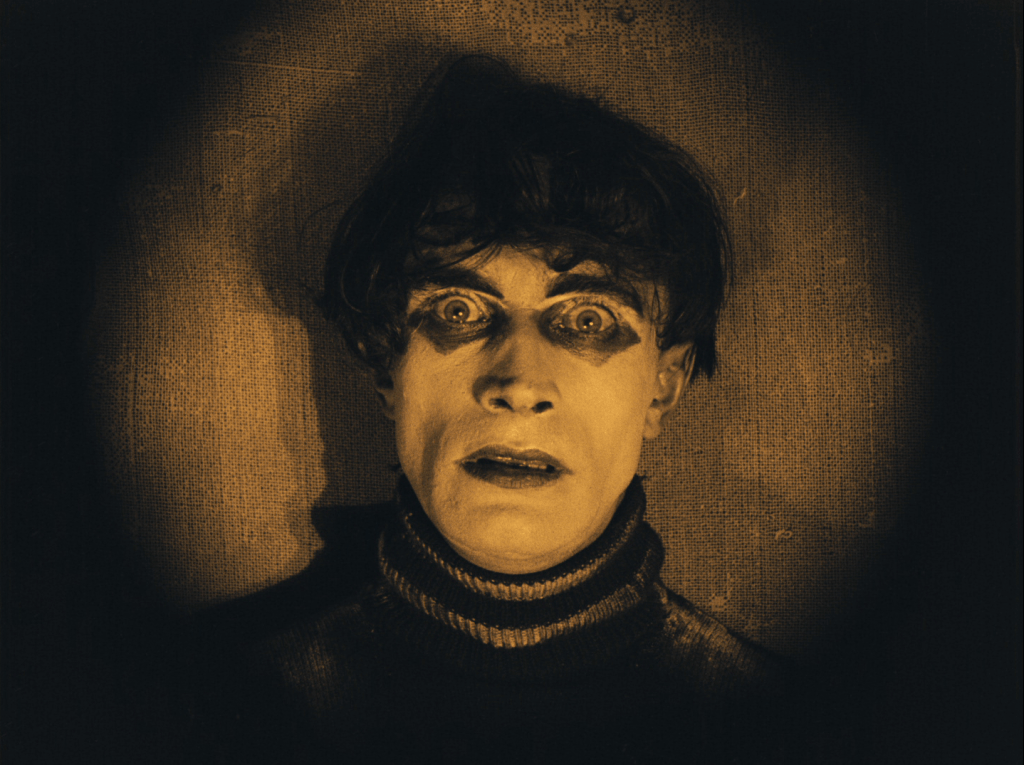
I think most of my initial interpretations were correct. I knew I was going to enjoy it, but I liked it a lot more than I thought I would. The set design, the music, the silent film format, and the fact that the movie was made in one of my favorite places and time periods to learn about, made this an incredibly enjoyable viewing experience. It has inspired a deeper interest in German Expressionism. The Cabinet of Dr. Caligari was not only unique, especially for its time, but it was well written and expressive. With horror being my favorite genre, I think it was enlightening to see what is known as the “first horror movie.” The inspiration and influence is undeniable.
 Aliyah's Archives
Leave a comment