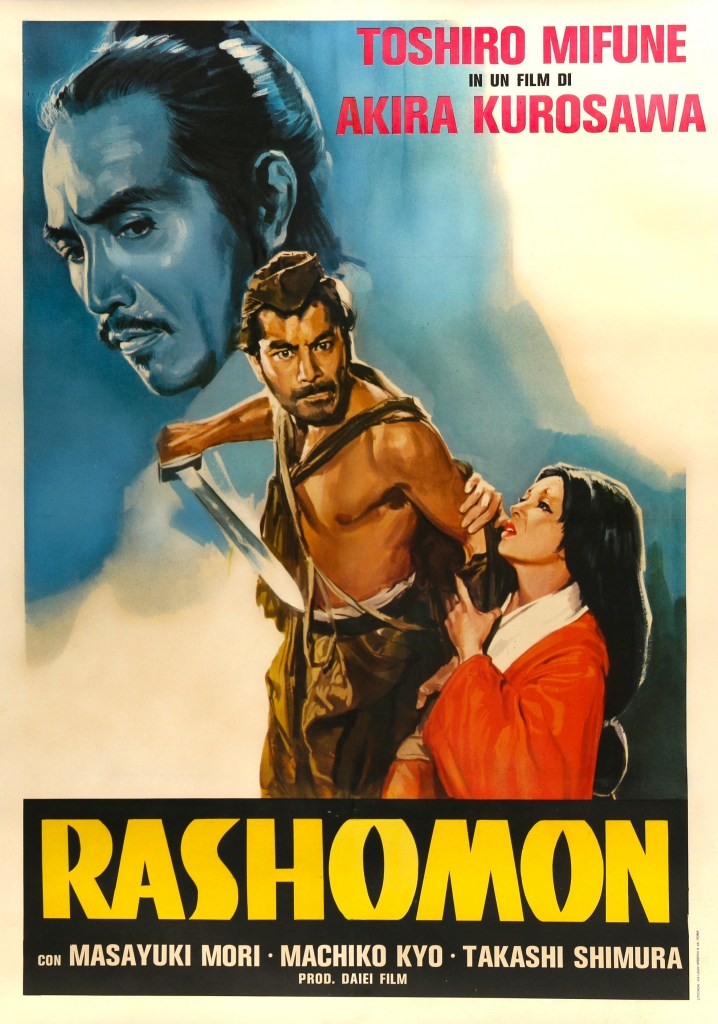
To be entirely honest, I had no expectations going into the movie. It was a long day and I zoned out completely and fell asleep for about the first five minutes. I found the long shots of the forest, the music and the dark room, all a little too calming. I think the power nap was necessary though, and right as the dialogue kicked off I felt a lot more focused (and awake). It was also disorienting to fall half asleep and return to consciousness just as the plot began, but I think the feeling really intensified the viewing experience. Initially, I enjoyed the visuals and the music. I really loved how a majority of this movie was in the forest, and locations were often vague and sometimes offputting, such as the court. I also found the content of this film incredibly important and interesting to delve into. The misogyny and portrayal of the woman, Masako, in this movie brought a lot of contemplation. Not only did the movie dig into this misogyny, but other concepts including morality.
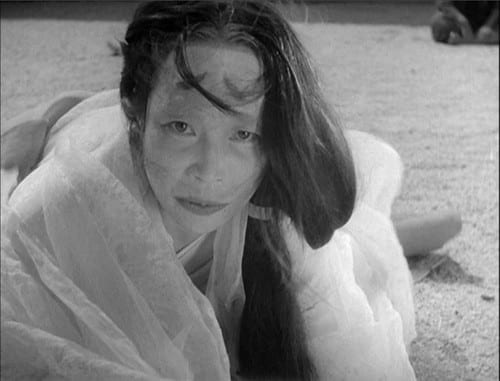
The visuals of this film evoke deep emotion. The woods give a sense of isolation, adding to the air of mystery around the samurai’s death. We are far away from anyone who could possibly help solve this. The court being in an indeterminable location gives an unsettling focus on individual characters. A sense of closeness, almost as if they are talking directly to you. The background is so bland and empty, there is nothing to look at besides each character’s eyes as they recount their story. The outfits were also interesting. The woman on the horse did look “goddess-like” with her hat, the way the lighting hit her white dress. She was almost highlighted in every scene. In stark contrast to the men in darker colors, the greens and browns of the forest. (It is black and white, but I guess I just fill in the colors in my memory). The eyebrows particularly stood out to me. The shaman had eyebrows drawn all the way up to the top of her forehead. Masako also had noticeable eyebrows, as they were only a small blob rather than more “eyebrow-shaped”. I understand this is a cultural look. It looked great on the Masako, but the drastic shape looked unsettling on the medium. It added an almost terrifying element as she made dramatic faces and threw herself around while speaking the voice of a dead man. The music also played a huge role in evoking emotion. I didn’t pay enough attention to notice specific details of the score, but it sounded amazing. There were also multiple scenes in which there was no dialogue where it felt there should be and instead told the story through the music, which I found incredibly impactful. It left a lot to be contemplated rather than said directly.
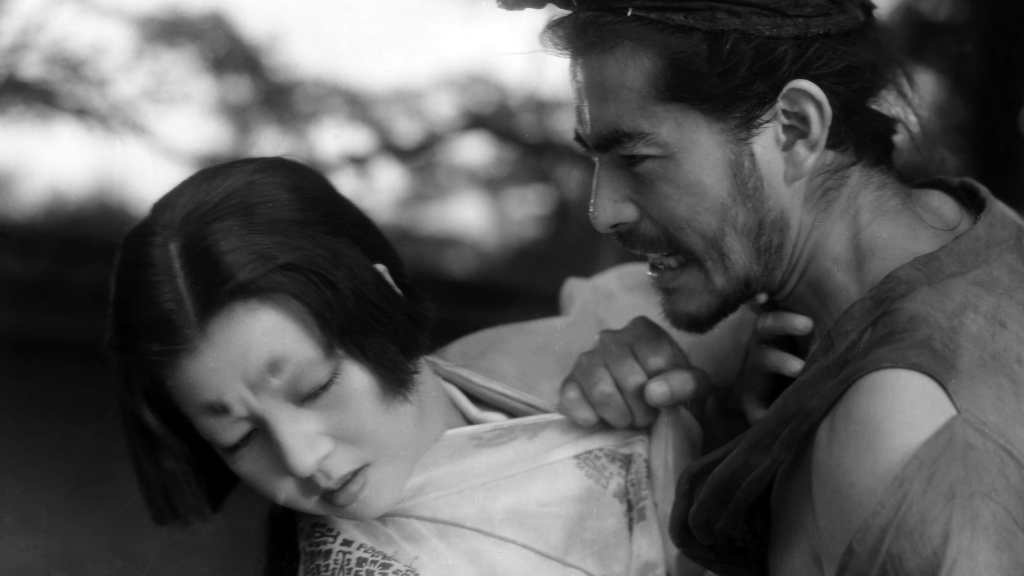
Tajomaru expressed that he “loved” the samurai’s wife. As infatuated as he was, he was more focused on conquering the woman and her husband. He wanted to feel not only that he owned her, but that he won her. Simply kidnapping her would not have been enough, he wanted to get her to choose him over her husband. He wanted to degrade her by making her feel the “shame” of being raped. The more she fought back, the more excited he was at the prospect of a challenge. I found the scene where he licked his arm after she bit him particularly stomach-turning. Tajomaru was such a disgusting character in his excitement to rape and his passion for Masako. The acting was phenomenal in feeling so realistic that I was almost worried Tajomaru would pop right out of the screen and rush toward me. I do not find many things scary in movies, but characters like this I find terrifying because I know there are real men who embody those qualities. (And real women who have suffered them) I also noticed that at one point, the wife mentioned she hoped Tajomaru would come save her, opening up the possibility that her husband also didn’t treat her well. She was looking for escape from both men. Through everyone else’s perspective, including her own, she was degraded and shamed, despite none of this being her fault. When the woodcutter told his side of the story, he expressed that she was empowered. She told both men that they were the ones who were weak, and how their possessiveness and competitiveness was ridiculous.
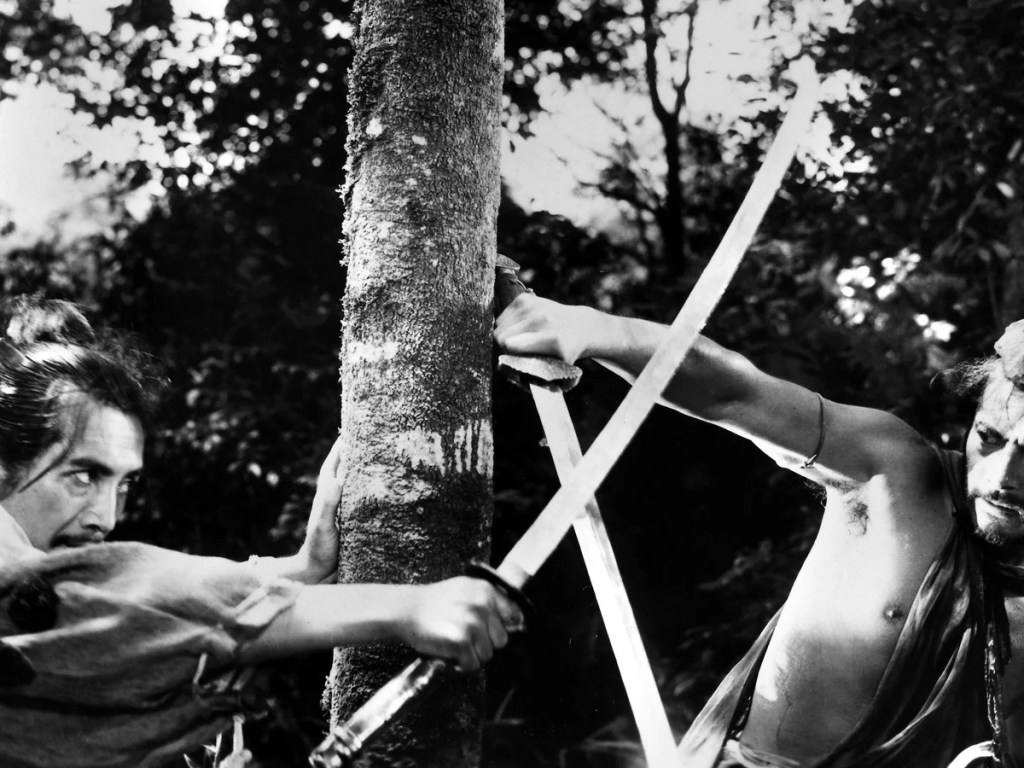
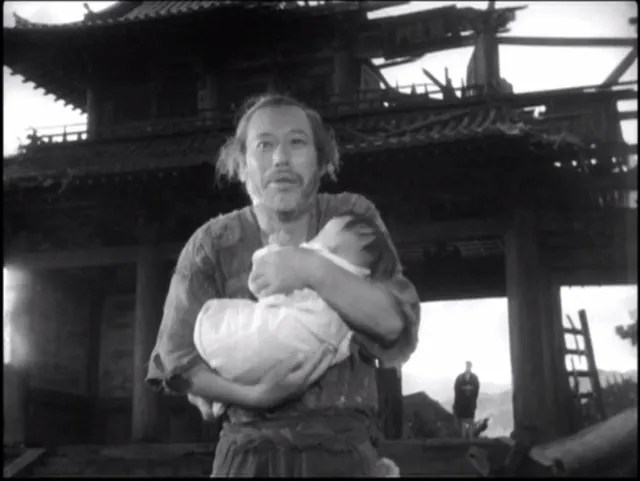
The movie has this overall theme of morality. It debated who was and who was not moral throughout the story, and how people tried to twist their actions in the name of morality or honor. This theme is made more obvious toward the end when the men find the baby in the rain. They discuss the morality of the parents, of taking the blanket from the baby, and what they should do now that they found it. The constant presence of falsehood brings distrust, and the woodcutter has to convince the other man he is trustworthy to care for the child. Although we have no way of determining whether or not he was telling the truth, it’s heavily implied. But, the audience and characters still hold the weight of his previous lie to the court. This brings the question: when is lying okay and when is it not? We see each character lie in order to gain something or protect themselves. Why do we condemn the lies of the samurai, Mosako, and Tojomaru, while accepting the lie of the woodcutter? This contrast reflects that lying is often human nature, whether intentional or not, and that morality is complex. While there is a contrast between good and evil here, we are also shown that each character is morally gray. No one is truly good here. It also made me think about how we accept the actions of people (men specifically) due to cultural or historical context. I understand the idea of a woman being with more than one man was taboo and shameful during this time, but that does not fully excuse the actions of the samurai. He was still an adult man who had the ability to process that what happened was not his wife’s fault. We still use this “boys will be boys” excuse today and it’s infantilizing to assume that men cannot or should not contemplate the morality of cultural norms.
I greatly enjoyed this movie. Not only was it visually fantastic, but it brought hours of contemplation for me. It gave just enough to leave room for endless thought, without giving away everything. This movie forces us to ask ourselves what is wrong and right, what is human nature, and if we are capable of defying harmful norms. It shows the harm that dehumanization of women can cause, and how that bias can even influence a woman’s perspective of herself. I will absolutely be rewatching this at some point (and forcing my mom to watch it with me). I think I will notice a lot more after a rewatch or two, and I will have to look at more of Kurusawa’s work.
 Aliyah's Archives
Leave a comment